
Most resellers in this category learn import compliance the way sailors learn about rocks, which is by hitting one. The rules are not complicated, but they are scattered across classification, product safety, chemical restriction, and labelling, and each of those four sits with a different authority in each market. A buyer who understands the shape of the whole thing can ask a supplier three questions and know whether the paperwork exists, and that is usually enough to avoid the expensive version of the lesson. What follows is the 2026 position as it applies to human hair goods moving from China into the major consumer markets, written for someone placing an order rather than someone writing a customs declaration.
Classification Comes First
Everything downstream depends on the tariff code, because the code decides the duty rate, the documentation, and in some markets whether the product is regulated as a textile, a cosmetic accessory, or a toy. Human hair wigs, false beards and similar articles fall under heading 6704, with finished wigs of human hair at 6704.20 and articles of human hair other than wigs at 6704.19. Bundles of human hair that have been worked, washed and aligned are not raw material and do not classify as a commodity; they are articles of hair, and the distinction matters because the duty rates differ and because a misclassification discovered at the border is treated as a misdeclaration rather than a clerical error.The practical consequence is that a supplier who cannot state the tariff code they use is a supplier who has not shipped to your market before, or has shipped through an intermediary who handled it. Ask for the code in writing on the commercial invoice. If the code on the invoice does not match the goods, the problem belongs to the importer of record, which is you, and no amount of correspondence with the factory will move it afterwards. The classification question also has a domestic dimension that buyers in some markets discover late. A finished wig and a bundle of loose hair can sit in different categories for the purposes of consumer product rules even when both are human hair, because one is worn as a garment and the other is a component. If your range includes both, ask for both codes rather than assuming one covers the shipment.
Duty, and the Assumption That Changed
For several years a large share of small cross-border reselling in this category was built on a de minimis threshold that let low-value parcels enter duty-free, and pricing models were constructed on the assumption that this would continue. That assumption has narrowed considerably, and the sensible planning position for 2026 is that duty applies and should be in the landed cost from the first unit. A reseller who prices without duty is not competing on efficiency; they are deferring a cost that will arrive with interest when the volume becomes visible to a customs authority.
The second change is enforcement rather than law. Data matching between carriers, marketplaces and customs has improved to the point where a pattern of undervalued declarations is detectable without anyone opening a box. The relevant number is not the value on a single parcel but the ratio between declared value and declared weight across a hundred parcels, and that ratio is easy to compute. Buyers should assume it is being computed. The practical response is to build the landed cost properly and then decide whether the product still works at that price. Duty, freight, and the compliance work behind the label add a percentage that most new resellers underestimate, and a range priced without them looks competitive right up until the first audit or the first chargeback. A supplier who understands this will help you model it, because a customer who discovers the cost after the order does not come back.
The European Route
Into the European Union, the General Product Safety Regulation has applied since 13 December 2024 and replaces the older directive with a broader obligation. The practical change for a hair importer is that a responsible economic operator established in the Union must be identified, and that operator carries obligations for traceability and for acting on unsafe products. A factory in Guangzhou cannot be that operator. A reseller selling into the Union either is the operator or has appointed one, and the appointment is a document rather than an understanding.Alongside that sits REACH, which restricts substances rather than products, and which is the regime that catches dyestuffs, finishes and any treatment applied during processing. The candidate list of substances of very high concern is updated twice a year, which means a supplier declaration that was accurate in January may be incomplete by July. A declaration is therefore only useful if it carries a date, and a supplier who cannot date their declaration has not understood what it is for.
The American Route
Into the United States, the relevant obligations depend on who the customer is and what the product claims. California’s Proposition 65 requires a warning for exposures to listed chemicals above defined thresholds, and while the listing is a state requirement it functions nationally because no reseller wants two versions of a label. The California Proposition 65 chemical list is public, updated regularly, and specific enough that a supplier can check it against their dye and finish inventory in an afternoon, which makes the absence of a check difficult to explain. The distinction between a warning and a prohibition matters here. Proposition 65 does not ban a listed substance; it requires a warning where exposure exceeds a threshold, which means the compliance question is not whether a chemical is present but whether the exposure is above the line. That is why the review has to be against the specific product rather than against a generic category, and why a supplier who offers a blanket statement has not done the work.
Beyond that, the Federal Trade Commission’s textile and labelling rules apply to hair products sold as hair, and a claim of human hair is a fibre content claim that must be accurate. A bundle with a synthetic blend at the tip is not one hundred per cent human hair, and the label is the place where that becomes a legal statement rather than a marketing one. The same principle applies to country-of-origin marking, which must be permanent and legible rather than printed on a bag that gets thrown away.
The Rules on a Timeline
Compliance is easier to hold in your head as a sequence than as a list, because most of the obligations were introduced in response to a specific failure and the sequence explains what each one is trying to prevent. The table below sets out the instruments that matter for a hair shipment, in the order they became applicable.
| Instrument | Applies to | What it requires | Document to hold |
|---|---|---|---|
| HS heading 6704 | All markets | Correct classification of wigs and hair articles | Commercial invoice with the code stated |
| REACH (EC) 1907/2006 | European Union | Restriction of substances in dyes and finishes | Dated SVHC declaration |
| California Proposition 65 | United States, in practice national | Warning where listed exposures exceed thresholds | Chemical review against the current list |
| FTC textile labelling | United States | Accurate fibre content and origin marking | Label artwork and composition statement |
| EU GPSR (EU) 2023/988 | European Union, from 13 Dec 2024 | EU-established responsible operator and traceability | Operator appointment and batch records |
| CPSIA | United States, children’s products | Testing and certification where marketed to children | Children’s product certificate |
The last row is the one resellers overlook, because the product is not designed for children and so the obligation is assumed not to apply. Marketing decides this, not design. A wig sold in a child’s size, photographed on a child, or described as suitable for a child is a children’s product for the purposes of the rules, and the certification requirement follows the marketing rather than the intention. If any part of your range could be read that way, the certificate is cheaper than the argument.
What the Supplier Has to Give You
Four documents, and each one should be dated. A commercial invoice stating the tariff code and the composition. A dated SVHC declaration if you are shipping into the Union. A chemical review against the current Proposition 65 list if you are shipping into the United States. And a batch or lot record that ties the goods to the other three. A supplier who can produce all four is unusual, and the unusual ones are worth keeping, because the documents do not just satisfy a border official; they are the evidence you need when a customer claims the product is not what was described.The order in which to request them matters less than the fact of requesting them before the deposit rather than after. A supplier who is asked for compliance documents after payment has no incentive to produce them quickly, and the ones produced under time pressure tend to be the ones with the wrong dates. Ask at quotation, keep the reply, and treat a supplier who answers with a certificate for a different product as a supplier who has not answered at all.
Labelling and Traceability
The label is where compliance becomes visible to the customer, and it is the cheapest place to get things right. Fibre content, country of origin, and any required warning must be on a permanent label rather than a bag, and the information must match the invoice rather than the catalogue. 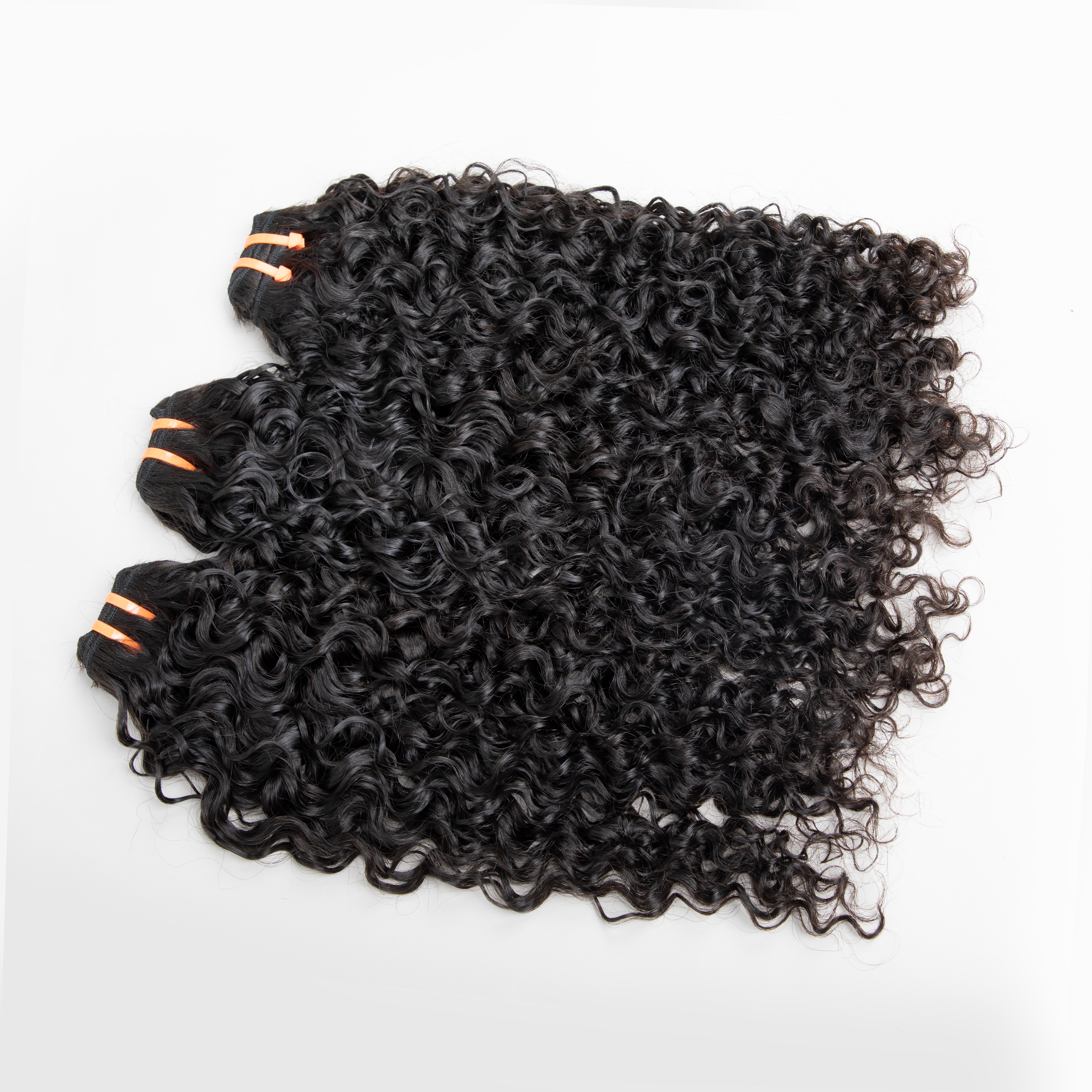 Traceability sits behind the label: a lot number that connects the goods to a production date and a test report. Without that connection, a recall cannot be scoped, and an unscoped recall means every unit you have ever sold is in question rather than one batch.
Where Shipments Actually Go Wrong
The failures are mundane and repetitive. A broker classifies the goods as raw hair because the word hair appears in the description, and the duty rate changes. A carrier consolidates parcels and the declared value is averaged across them. A label is printed with the wrong origin because the artwork was reused from a previous order. A certificate of origin names a trading company that does not appear on any other document, and the discrepancy triggers an examination. None of these is fraud and all of them cost weeks.
The defence is boring: one set of documents that agree with each other, a broker who has handled this product before, and a supplier who can answer a question about their own paperwork within a day. That is a lower bar than it sounds and a higher bar than most suppliers clear. Buyers who want to see what a compliant range looks like in practice can start with the perm rod colors guide, which is a reminder that the finished look is what the customer judges, and with the blue band hair vendor pages, where the grade claim on the label is the same claim the invoice has to support.  The rules will keep moving, and the suppliers who keep up are the ones who treat compliance as a filing habit rather than a project.
About the Author